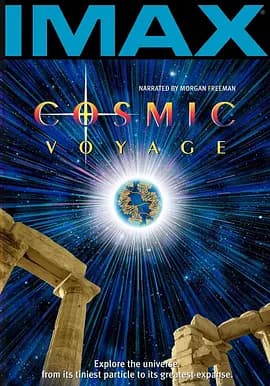
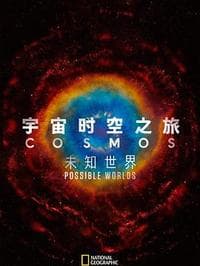
The IMAX "Cosmic Voyage" film was made as a public service with sponsorship by the Smithsonian Air and Space museum. On DVD, borrowed from my local public library, it plays at just over 30 minutes with Morgan Freeman supplying a pleasing narrative. As one would expect from an IMAX film, the image quality is superb and the Dolby 5.1 sound track is very well done. Simulated cosmic explosions shake your walls! That is, if you have a good powered subwoofer in your system. The film takes a very useful approach to examining the size of the universe, from tiny sub-atomic particles to the vastness of the whole universe. (Fortunately, when God created the Universe he had dispatched a few angels with video cameras at different vantage points so we get to see actual footage from several billion years ago.) The film starts in Venice, where the discovery of the telescope originated, and uses a one-meter hoop as a reference point, then gradually goes larger by powers of 10, e.g. 10 meters, 100, 1000, etc until we can see the whole universe. Then it takes the opposite journey, going smaller by powers of 10 until be see inside sub-atomic particles. The story is well-woven with beautiful effects created especially for this film. It is entertaining and educational at the same time. All of "oldsters" can enjoy it for the scientific history we are already familiar with, and all the "youngsters" can enjoy it for the educational supplement it provides. Overall a masterful film. Any numerical "rating" of "Cosmic Voyage" is meaningless. If one is looking for a superb film about our universe and modern theories of its formation, this one is hard to beat. Kudos to IMAX and to the Air and Space Museum. 肉眼只能看见穹苍一角。凝视夜空,但见繁星点点,偶尔一颗流星划破夜空,但你可曾看见恒星死亡前的最后爆发?瞪视双手,你或会看见点点尘垢,但你又可曾看见组成皮肤的原子在颤动?因为眼不能见,我们只能纵驰想像,去探索这个深邃广阔的宇宙。 本片获第六十九届奥斯卡金像奖最佳纪录短片提名.
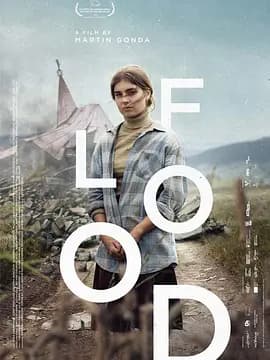
The film delves into the unexplored theme of the displacement of the Rusyn, an East Slavic ethnic group from the Eastern Carpathians in Central Europe, during the construction of the Starina reservoir in the 1980s. Set against this tumultuous backdrop, Flood intertwines personal and collective stories, bringing to the forefront the often-overlooked plight of the Rusyn minority in Slovakia. Gonda's film speaks to minorities, individuals who have experienced displacement and young adults through its protagonist, Mara. The story unfolds in a small village, threatened by an impending flood due to the construction of the reservoir. Mara, a young woman yearning for city life and an education, is bound to her rural roots by her strict father, a Rusyn farmer, who refuses to relinquish his land and legacy despite the looming end of their world. Flood explores the themes of adolescence, uprooting and the sacrifice of personal desires for the greater good. The film seeks to elicit reflections on one's roots and the concept of home, as well as the challenges of navigating a disappearing culture and heritage. The Starina reservoir's construction, which lasted from 1981-1988, led to the largest displacement in Slovak history. Gonda's personal connection to the region, having spent his childhood summers there, adds a layer of authenticity and depth to the narrative. The film not only recounts the physical destruction of the seven Rusyn villages, but also captures the emotional and cultural impact of this event on the community. The director aims to present a deeply researched, emotive and intimate story as well as diving into the complex dynamics between personal identity, community ties and the inexorable march of progress. The movie is poised to engage and challenge audiences, fostering a deeper understanding of the often-painful interplay between tradition and modernity.