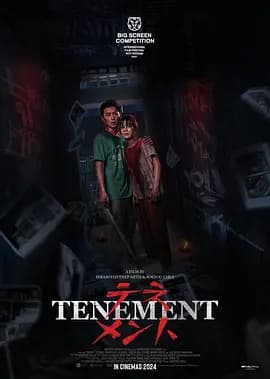
Following her mother’s death, manga artist Soriya travels to her ancestral home in Phnom Penh, with hopes of reconnecting with her distant family and using the visit as inspiration for her work. All goes well initially. Renting an apartment in Metta, a rundown Khmer Rouge-era housing complex, her visit to her maternal relatives finds her welcomed with open arms. But Soriya’s waking hours in the apartment and its surroundings are punctuated by terrifying, bloody visions, almost as though she were a conduit for horrors of the past wanting to seep into the present. Inrasothythep Neth and Sokyou Chea’s blood-chilling psychological horror explores a personal and political past through the present, transforming a characterful space into an insidious environment. Surrounded by modern high-rises, this decrepit structure, with its brutalist architecture and peeling surfaces, is a relic from a dark period in history whose painful memories it has absorbed. In tracing Soriya’s ominous journey back to her roots, Tenement hints at a necessary reckoning with Cambodia’s political past without overplaying its historical dimension. It’s an impressive work from a woefully underrepresented national cinema.
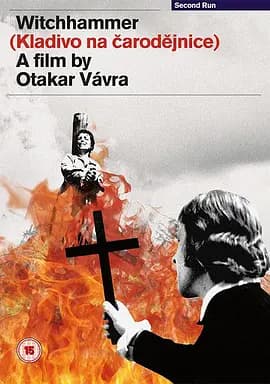
In a Czech town in the seventeenth century, an elderly woman enters a church to accept communion. Her true purpose is to collect the holy host for a midwife who needs it to treat an ailing dairy cow. The woman is caught and is forced to explain her sacrilegious actions. Religious and secular authorities agree that she is in league with witches and may even be a witch herself. This prompts an inquisition where confessions are obtained through threats and torture. A tribunal is held to provide a legal facade. Though the hunt is initially confined to the impoverished fringes of local society, the hysteria soon expands to the point that no one, not even leading citizens, is safe. The ultimate target is a clergyman, Deacon Lautner, who defies the righteous men of the tribunal. Based on actual trial records from the 1678 to 1695 period, this well made Czech film features excellent performances and strong production values. It is somewhat extreme by 1969 standards.
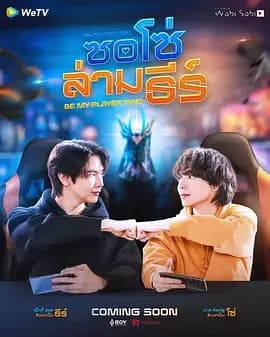
一位口齿伶俐的主播与新手玩家!顶级主播Thi追捕神秘玩家Zo,后者竟屡次击败他。一场原本只为猎杀对手的追逐,却意外演变成一段情缘的发现。 ~~ 改编自Brave2Y(หน่วยกลว้าวาย)的小说《游戏玩家与他的小呆弟 #SoSoLamThi》。 A sharp-tongued streamer and rookie gamer! Thi, a top streamer, hunts down Zo, a mysterious gamer who defeats him. What begins as a hunt for a rival unexpectedly turns into a discovery of love. ~~ Adapted from the novel "Gamer Lae Nong Doe Khong Khao #SoSoLamThi" (เกมเมอร์และน้องเด๋อของเขา #ซอโซ่ล่ามธีร์) by Brave2Y (หน่วยกลว้าวาย)
Through the eyes of a young girl uprooted from Yugoslavia to Denmark, we watch a family navigate a new world and rebuild their lives while holding on to what they left behind. Home speaks to belonging, sacrifice and the generations shaped by displacement. Maja is six years old when most of her family moves from the Yugoslav SFR to Denmark, leaving her two brothers behind for the time being, waiting to follow the rest to the promised land. Denmark proves to be far from the welcoming haven they imagined. There is a new language to learn, new customs to navigate, new skies to understand. Did they really want to stay? Maja grows up in Denmark, builds a life and a career there as an artist, yet she cannot forget all that her parents left behind. Actress-turned-director Marijana Janković was the same age as Maja when her own family left Ivangrad (today Berane) for the European north, and that is only the most superficial similarity between the two. As two of her leading men, fellow Ivangradian Dejan Čukić and Osijek’s one and only Zlatko Burić, will surely know, the details of Maja’s or Marijana’s story may be specific, but the larger flow of things has remained the same across generations and countries of origin.