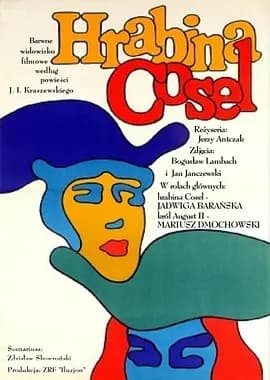
"The Countess Cosel" is based on the true story of the beautiful Anna Constantia von Brockdorff, a German noblewoman who became mistress of Augustus the Strong, King of Poland and Elector of Saxony in 1704. Against the backdrop of life at Augustus' court the movie follows the arrival at Dresden of 24-year-old Anna Constantia von Brockdorff, who is an inordinately beautiful and scrupulously devout young married woman; her romance with the king and her "ten year reign" as his mistress - a role she consents to in the belief that she has won the king's love and commitment; and finally, her heartbreak, disillusion and struggle against him. The conflict between Anna and the king arises from the fact that Anna takes seriously not only the relationship, but the written promise of marriage which she manages to secure from him during their courtship. Neither the relationship nor the contract is held in much esteem by Augustus, who replaces her, as he has always done, with another mistress, as soon as she loses for him the charm of novelty. Her valiant refusal to return the marriage promissory note upon request enrages him and delivers her to her miserable fate.
To the streets, “Raq” Thomas is cold, hard and fierce — a successful and deadly woman taking names in a man’s world. She is tough, resolute, ruthless, but Raq still is capable of love. Great love. The sole recipient of that affection is her son, Kanan; he is everything to her. As much as she cares for him, though, there are many instances where one wonders if she loves him for who he is or if she loves him merely as an extension of herself. The middle child of three, Raq also carries the heavy burden as the earner for her two brothers. She is the sun, and everyone else in her universe exists in her orbit.
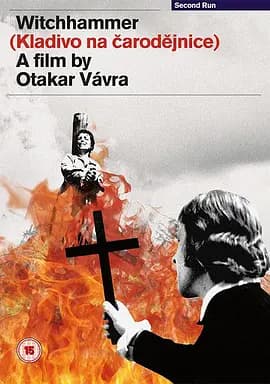
In a Czech town in the seventeenth century, an elderly woman enters a church to accept communion. Her true purpose is to collect the holy host for a midwife who needs it to treat an ailing dairy cow. The woman is caught and is forced to explain her sacrilegious actions. Religious and secular authorities agree that she is in league with witches and may even be a witch herself. This prompts an inquisition where confessions are obtained through threats and torture. A tribunal is held to provide a legal facade. Though the hunt is initially confined to the impoverished fringes of local society, the hysteria soon expands to the point that no one, not even leading citizens, is safe. The ultimate target is a clergyman, Deacon Lautner, who defies the righteous men of the tribunal. Based on actual trial records from the 1678 to 1695 period, this well made Czech film features excellent performances and strong production values. It is somewhat extreme by 1969 standards.
主演:奥布里·卡兰 / Jairus Aquino / Lance Carr / Meg Imperial
“Rosario,” directed by Bobby Bonifacio Jr., draws on a Filipino superstition which dictates that a broken rosary must be placed in the hands of the dead; but when an unbroken rosary is mistakenly left in the hands of a deceased woman, a deadly family curse is unleashed.