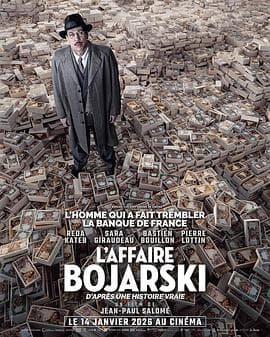
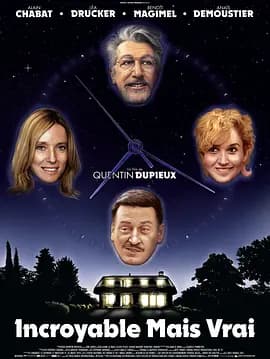
The story charts how young Polish refugee Jan Bojarski became the biggest counterfeiter of all time, “the Cézanne of fake money”, in post-war France; how, for over fifteen years and unbeknownst to his family, this man led a double life making counterfeit money - which was “more real” than the notes printed by the Bank of France - in a shed at the bottom of his garden; and how, in all these years, this unparalleled faker managed to slip through the police’s net to become the thorn in Commissioner Mattei’s side, over the course of a hunt which fast turned into a duel for these two obsessives…
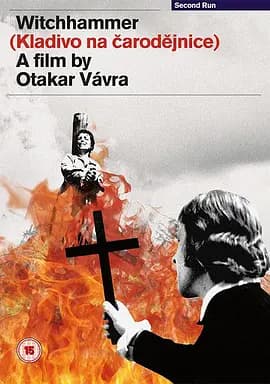
In a Czech town in the seventeenth century, an elderly woman enters a church to accept communion. Her true purpose is to collect the holy host for a midwife who needs it to treat an ailing dairy cow. The woman is caught and is forced to explain her sacrilegious actions. Religious and secular authorities agree that she is in league with witches and may even be a witch herself. This prompts an inquisition where confessions are obtained through threats and torture. A tribunal is held to provide a legal facade. Though the hunt is initially confined to the impoverished fringes of local society, the hysteria soon expands to the point that no one, not even leading citizens, is safe. The ultimate target is a clergyman, Deacon Lautner, who defies the righteous men of the tribunal. Based on actual trial records from the 1678 to 1695 period, this well made Czech film features excellent performances and strong production values. It is somewhat extreme by 1969 standards.
One soul sacrifices everything for others. Another clings fiercely to their own happiness. Their confrontation lays bare old wounds and grudges spanning three generations. Love and hatred intertwine, turning family into a battlefield where vengeance burns hotter than the sun. 一个灵魂为他人牺牲一切。 另一个则紧紧抓住自己的幸福。 他们的对抗暴露了跨越三代人的旧伤和怨恨。爱与恨交织在一起,把家庭变成了复仇比太阳还炽热的战场。