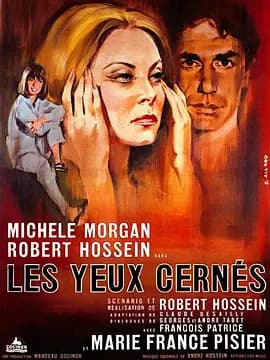
A widow (Michele Morgan) in a small town begins to realize that her late husband was hated by nearly everybody. She begins to receive blackmail letters that threaten to further humiliate her if she does not pay up. She enlists the help of Franz (Robert Hossein), a man who was once fired by her late husband, to track down the source of the letters. She becomes unhinged and eventually tries to kill the man who is helping her in this early example of a Giallo.
The film is based on the life of Razia Sultan (1205–1240), the only female Sultan of Delhi (1236–1240) and her speculated love affair with the Abyssinian slave, Jamal-ud-Din Yakut.
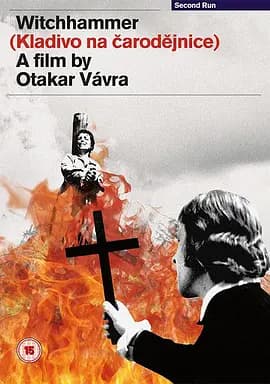
In a Czech town in the seventeenth century, an elderly woman enters a church to accept communion. Her true purpose is to collect the holy host for a midwife who needs it to treat an ailing dairy cow. The woman is caught and is forced to explain her sacrilegious actions. Religious and secular authorities agree that she is in league with witches and may even be a witch herself. This prompts an inquisition where confessions are obtained through threats and torture. A tribunal is held to provide a legal facade. Though the hunt is initially confined to the impoverished fringes of local society, the hysteria soon expands to the point that no one, not even leading citizens, is safe. The ultimate target is a clergyman, Deacon Lautner, who defies the righteous men of the tribunal. Based on actual trial records from the 1678 to 1695 period, this well made Czech film features excellent performances and strong production values. It is somewhat extreme by 1969 standards.